
Wood Floors in the Kitchen: What a Slow Dishwasher Leak and Daily Spills do to the Finish

Learn how dishwasher leaks and daily spills affect kitchen wood floors, damage the finish, and discover practical ways to prevent moisture-related problems.
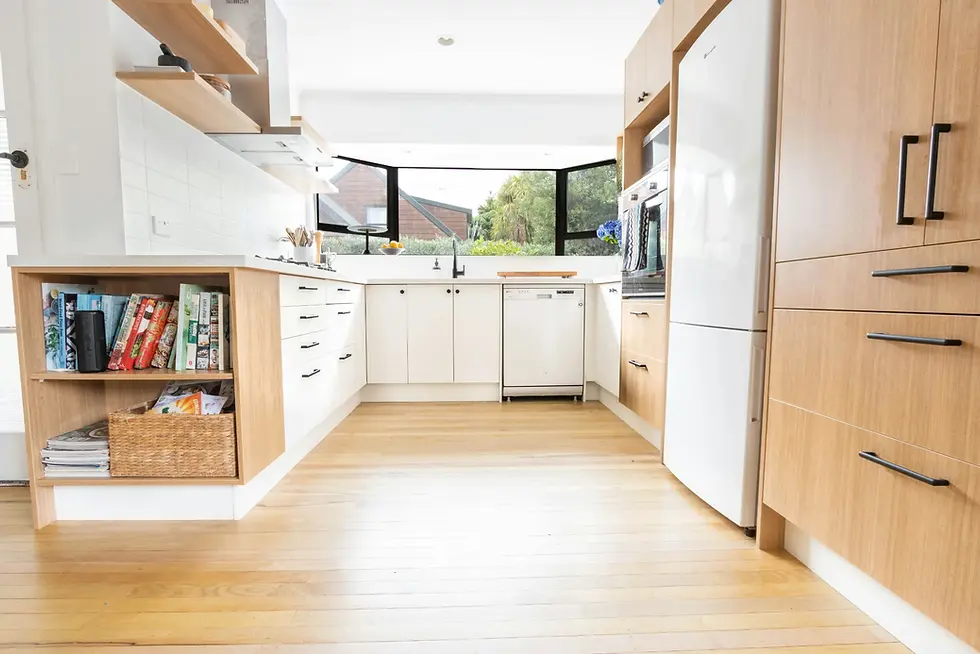
Wood floors in the kitchen can handle a spilled glass of water. They struggle with a dishwasher that leaks a little every cycle for weeks. The finish looks fine in both cases until the boards start to lift, and by then the damage is underneath them.
1. The finish is a film, and water goes around it
Polyurethane and other floor finishes sit on top of the wood as a protective layer. They guard the top wear layer, and they cannot make wood waterproof, as experts point out. Wood also expands and contracts with heat, humidity and moisture, so the film is always working against a surface that moves.
Water gets past it in three ways: through the seams between boards, through scratches that break the film (water that gets under the finish leaves stains in the grain), and from below through the subfloor. A kitchen floor with an intact finish shrugs off a spill. A scratched one lets it in.
2. Daily spills: what actually matters
A small spill wiped up quickly does no harm, and a small spill noticed later usually doesn't either. Trouble starts when water stays. Prolonged contact makes wood swell or stain.
Spills pile up in the same four places:
in front of the sink
along the dishwasher door where it drips on opening
under the fridge water or ice dispenser
around pet bowls
The first sign is a dull patch where the finish is wearing thin. Once the finish wears through, bare wood takes water directly. Put a mat in front of the sink, wipe drips before they dry into the seams, and mop with a barely damp cloth. Skip the steam mop, which pushes hot moisture into the seams.
3. A slow dishwasher leak is a different problem
A big leak from a dishwasher or icemaker will likely damage the floor, and it usually pools under the appliance first. A small leak that nobody sees does more harm. Water can travel under the boards and go unnoticed until they buckle or swell.
The finish hides all of this. Water moves along the toe-kick and under the cabinet, and the wood drinks from the underside while the top stays glossy. That moisture imbalance across the thickness of the board is what causes cupping: the wet underside swells and the edges rise.
4. Signs to check this week
A soft or spongy spot near the dishwasher
A cloudy or whitish haze in the finish
Dark gray or black staining at the seams
Board edges that feel raised when you run a hand across them
A swollen cabinet base or toe-kick
A musty smell near the dishwasher
A water bill that creeps up without a reason
Then do three checks. Look along the floor from a low angle with a flashlight. Pull the kick plate and look for damp or staining. Run a cycle and press a dry paper towel along the door seal, under the front, and around both hoses.
5. If you find water: the order that saves the floor
Shut off the water to the dishwasher first, then fix the source. After that, dry the area and measure moisture before touching the floor. Do not sand a cupped floor early. Sanding it flat before it has dried can leave it crowned once conditions return to normal. A minor case can take months to settle, so keep indoor humidity in the usual 30% to 50% range while it does.
Match the repair to what you see:
What you see | What it usually needs |
Dull finish, boards flat | Screen and recoat |
Gray seams, boards flat after drying | Sand and refinish the area once moisture reads normal |
Cupped boards that flatten as they dry | Wait, measure, then sand |
Buckled or soft boards | Replace the boards and check the subfloor |
Replacing a few planks is rarely a small job, because new boards have to blend with old ones and a repair can spread across the room. Before anyone pulls boards, ask how they measure moisture. Weles says it checks moisture before it fastens a board and holds the gap between subfloor and wood within 4%, so ask any Boston hardwood flooring company you call for its number before it replaces a single plank.
6. What insurance usually says
Washington State's insurance regulator describes the split most policies use. Sudden appliance failures, such as a dishwasher overflowing mid-cycle, are generally treated as covered accidents if you report them promptly. Leaks that run for a long time are usually not covered, and insurers treat them as maintenance. Mold coverage is limited. That puts a slow dishwasher leak on the uncovered side, which is one more reason to check the signs above. Policies vary by state and carrier, so ask your agent before you need to.
7. Is wood in the kitchen worth it?
For most homes, yes, with a few conditions. Keep the finish in good shape and recoat it when the sink and dishwasher zone turns dull. Put a mat in front of the sink. Replace old dishwasher supply hoses with braided stainless steel ones, add a leak detector next to the dishwasher, and watch the water bill.
If you will not do any of that, an engineered or hybrid wood-look floor with a waterproof core is the safer pick.


Comments