
12 Staging Ideas for Homes With Harsh Desert Light

Discover 12 staging ideas for homes with harsh desert light that cut glare, protect finishes, and make Arizona listings photograph the way buyers expect.
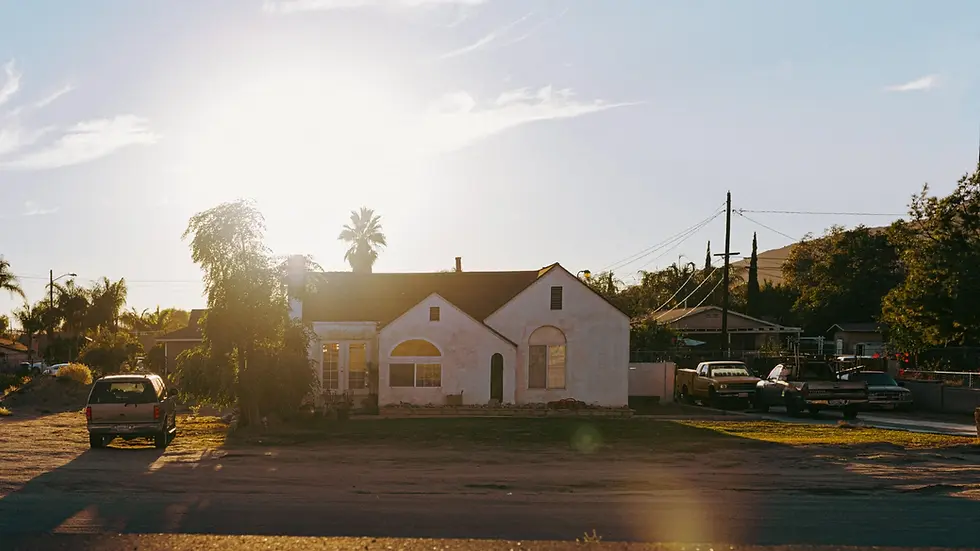
Most staging advice was written for soft, cloudy, north-facing light. Then you stand in a west-facing living room in Chandler at 4:30 in July and realize none of it applies. The light isn't pretty here. It flattens color, throws hard-edged shadows across the floor, and turns the television into a mirror.
Two hours earlier the same room looked bleached out. Two hours later it looks orange.
Phoenix gets sunshine 86% of possible daylight hours, so there is no cloud cover doing the diffusion work for you. These twelve ideas are grouped the way you should actually tackle the job: control the light first, borrow the local playbook, protect what the sun attacks, then shoot it properly.
Start at the Glass
Everything downstream gets easier once the windows are handled. Sellers usually start with furniture, which is backward.
The reason is heat as much as glare. Windows drive 25% to 30% of residential heating and cooling energy use, and in a Phoenix summer that shows up as a west wall radiating warmth into a room buyers are trying to picture themselves in.
1. Solar Shades on the West Glass
Treat the west window as a fixture rather than a view. Solar shades in the 3% to 5% openness range cut glare hard while keeping the sightline legible, so the room still reads as bright and connected to the yard. Anything more opaque solves glare by killing the thing buyers came for.
2. Sheer Layers for Diffusion
Sheer panels are the cheapest atmosphere change in the house. They convert a hard beam into soft, even fill across the room. Hang them wide and high, past the casing on both sides, so the drawn panels rest on wall instead of covering glass you paid for.
3. UV Film Instead of Heavier Drapes
Quality window film blocks up to 99% of UV transmission without darkening the room the way blackout fabric does. It also protects the floors and upholstery you just staged. For a listing that may sit through a full summer, that protection is not a small consideration.
Borrow the Local Playbook
Some of this is not intuitive if your reference points came from a national design blog or a show filmed in Vancouver. It is regional pattern recognition, and it tends to travel through brokerages rather than books.
Realty ONE Group, a real estate franchise Arizona agents join in significant numbers, builds market-specific training and listing-marketing help into its agent coaching program, which is the layer where this kind of local knowledge actually gets passed along.
4. A Morning Photo Window
Photos carry more weight than the staging itself. In NAR's 2025 staging report, 88% of sellers' agents rated listing photos as their clients' top priority. East rooms shoot best around 8 a.m., west rooms before 10. A 4 p.m. shoot of a west-facing great room gives you blown-out windows and a dark interior in one frame.
5. Pre-Cooled Rooms Before Showings
Masonry, tile, and drywall hold heat. An air conditioner switched on twenty minutes ahead cools the air but not the surfaces. Start two hours early instead. Buyers register radiant warmth off a west wall even when the thermostat reads perfectly comfortable.
6. Exterior Shade Before Interior Fixes
An awning, a pergola panel, or a well-placed potted palo verde stops solar gain before it reaches the glass. Exterior shading outperforms anything you hang indoors. It also photographs as a lifestyle feature rather than a repair, which is a rare double win in staging.
Protect What the Sun Attacks
Desert sun is not just a lighting problem. It is a materials problem, and it works slowly enough that sellers often miss it until the listing photos come back looking tired.
UV radiation drives roughly 40% of fading damage to fabrics, floors, and finishes, with heat and visible light accounting for most of the rest.
7. Matte Finishes Over Gloss
Lacquered tables, high-sheen wall paint, and polished stone all produce specular hot spots that a camera reads as blank white patches. Eggshell paint, honed counters, and unlacquered metal photograph far better under direct sun and look calmer in person too.
8. Warmer Whites, Not Cooler
Cool grays and blue-whites look crisp under showroom lighting and turn clinical under desert sun. Warmer whites and soft clay tones hold their character at high illuminance. It is a one-step adjustment that changes how every room in the house reads.
9. Texture Where Shadow Disappears
Overhead midday sun erases shadow, and without shadow a room loses depth and flattens into a rectangle of objects. Bouclé, jute, ribbed ceramic, and slubby linen generate their own small shadows. Reach for texture before reaching for more color.
Finish With the Camera in Mind
The last three fixes are about what the lens sees, which is not always what you see standing in the room.
10. Mirrors Off the Window Wall
The standard advice to hang a mirror opposite a window comes from gray climates where the goal is more light. Here it just doubles a glare source. Move the mirror to a perpendicular wall, where it picks up ambient light instead of throwing the sun back at everyone.
11. Dark Wood and Leather Out of the West Sightline
Dark surfaces in the afternoon sun absorb heat, get genuinely unpleasant to touch, and can warp or check over a long listing. Lighter upholstery in that zone is a practical decision before it is a visual one, and it keeps the corner from photographing as a black hole.
12. A Twilight Exterior Shot
Around twenty minutes after sunset, ambient sky light and interior lamps reach roughly the same brightness, and the house glows instead of glaring. Switch on every warm lamp inside, leave the harsh overheads off, and let the desert sky handle the color. It is the only hour when Arizona light is unambiguously flattering.
Conclusion
If you only do three of these, diffuse the west windows, move the photo shoot to the morning, and trade gloss for texture. Those three cost very little and fix most of what harsh light does to a listing. Everything else on the list is refinement.
The larger point is that desert light is not a flaw to hide. Buyers moved to Arizona for it. Good staging just has to demonstrate that the house knows how to handle it, which is a much more appealing message than a room hiding behind blackout curtains.
FAQs
Q1: What time of day should I photograph an Arizona listing?
A: Shoot east-facing rooms around 8 a.m. and west-facing rooms before 10 a.m., then add a twilight exterior roughly twenty minutes after sunset for the strongest single image.
Q2: Does window film make rooms look dark?
A: Modern high-transmission films block the great majority of UV while keeping visible light largely intact, so choose a product by its visible light transmission rating rather than assuming all film darkens a room.
Q3: What paint sheen works best in high desert sun?
A: Eggshell or matte on walls and honed rather than polished stone on surfaces, since higher sheens create bright reflections that cameras record as featureless white patches.
Q4: How early should I cool the house before a showing?
A: Start about two hours ahead so wall, tile, and floor surfaces have time to release stored heat, not just the air the thermostat is measuring.
Q5: Are blackout curtains a good staging solution for glare?
A: Usually not, because they solve glare by removing the natural light buyers are shopping for. Solar shades, sheers, or UV film manage the problem while keeping the room bright.


Comments