
Pigeon Control for Large Facilities: Why Physical Barriers Aren't Enough

Learn why physical barriers alone are not enough for pigeon control in large facilities and explore more effective long term management strategies.
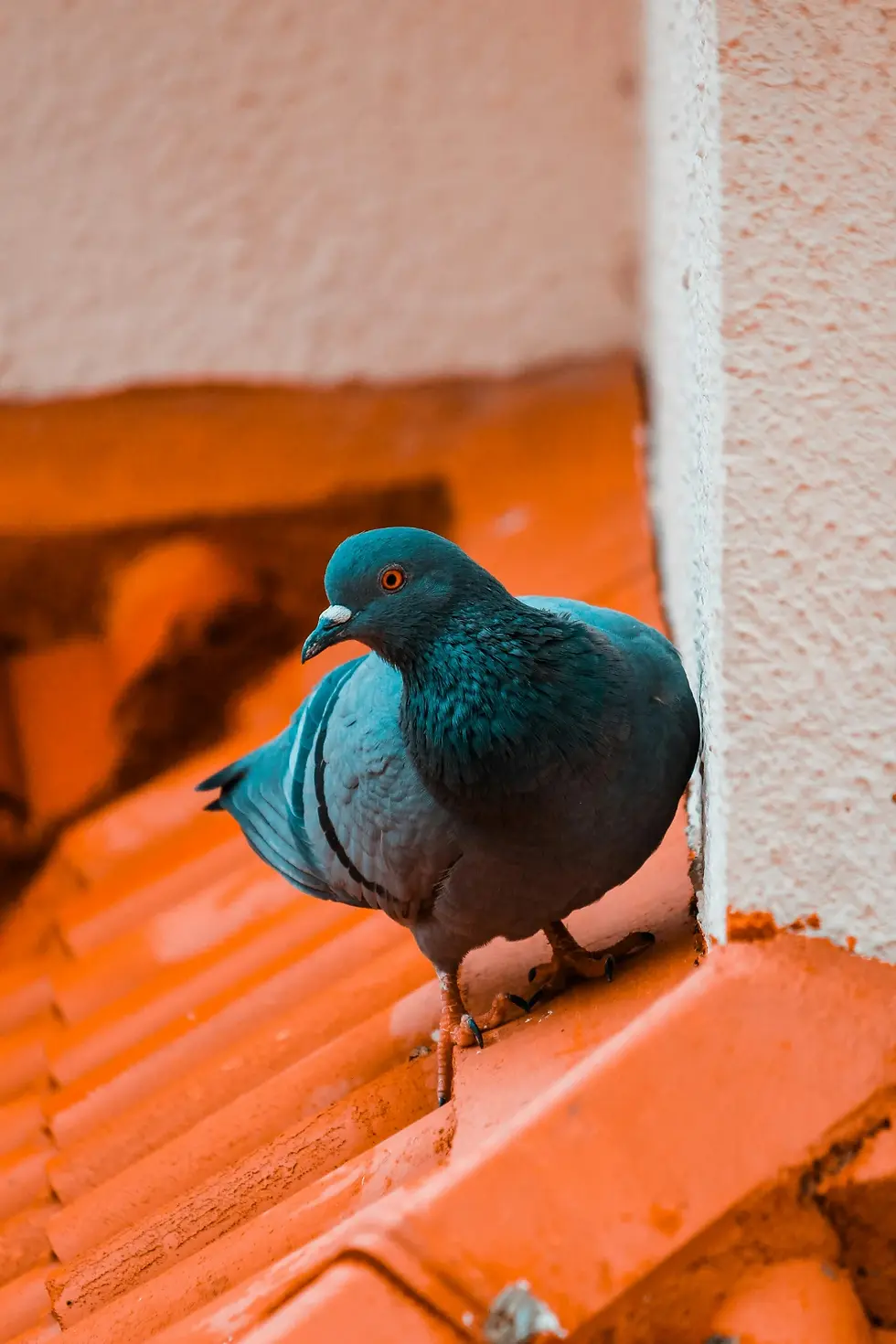
Pigeons cost American businesses an estimated $1.1 billion annually in property damage, cleanup, and health-related expenses, according to pest management industry data. Large facilities like warehouses, power plants, hospitals, and manufacturing sites bear the heaviest share of that cost. The scale makes it complicated.
Conventional approaches look manageable on paper. In practice, they rarely stick. Physical barriers get installed, managers check a box, and within a few seasons the problem returns. Pigeon control for large facilities demands more than a net strung across a loading dock or spikes bolted to a ledge. What actually works requires rethinking how you approach the entire problem.
Physical Barriers Have Real Limitations at Scale
Spikes, nets, and wire systems work reasonably well on small, well-defined surfaces, but scale those same products across a 500,000-square-foot roof, a network of structural beams, or an industrial HVAC array, and the economics collapse. OvoControl, effective pigeon control company, represents one part of a broader, longer-term management strategy that many facility operators turn to once they realize physical barriers aren't solving the root problem.
A large facility has dozens of ledges, parapets, drainage channels, and equipment pads where pigeons can settle. Covering every surface thoroughly requires enormous material costs, professional installation labor, and ongoing maintenance contracts. Gaps appear over time; fasteners loosen, materials degrade, birds find unprotected surfaces nearby. The flock doesn't disappear. It relocates 40 feet away, and the cycle starts over.
Flock Population Is the Variable Barriers Ignore
Physical exclusion moves birds; it doesn't reduce them. That distinction matters. A net over a rooftop courtyard may protect that specific zone, but the same flock, intact in numbers, continues to inhabit the surrounding structure. Breeding continues. New birds hatch. The colony sustains itself and sometimes grows because the birds are concentrated into fewer available spaces.
Population management is where you actually get results that last. Contraceptive bait programs, trap-and-remove efforts, targeted reduction methods, they all address the number of birds present on site, not just where they perch on a particular surface. And here's the thing: facilities that combine population reduction with physical exclusion see meaningfully better outcomes than those that rely on barriers alone. Fewer birds means fewer surfaces at risk, less droppings accumulation, and lower cleanup frequency over time.
Health and Regulatory Exposure Don't Wait for Barriers to Fail
Pigeon droppings carry pathogens including Histoplasma capsulatum, Cryptococcus neoformans, and Chlamydophila psittaci; all pose documented occupational health risks according to the CDC. In regulated industries like food processing, pharmaceuticals, and healthcare, a single contamination event can trigger inspection failures, production shutdowns, or OSHA citations. Physical barriers reduce contact surfaces in protected areas, but they don't neutralize droppings already deposited in unprotected zones.
Large facilities have workers on rooftops, in mechanical rooms, near loading docks, around cooling towers. These are exactly the spaces where pigeons concentrate and barriers are hardest to install correctly. Look, a thorough health protection plan treats pigeon exposure as an ongoing occupational hazard, not a one-time construction problem. Regular monitoring, documented cleaning protocols, respiratory protection for maintenance staff, population control measures, all of it belongs in that plan alongside any physical hardware.
Structural Damage Accumulates in the Gaps
Pigeon uric acid in droppings has a pH around 3 to 4.5, making it corrosive enough to damage roofing membranes, metal flashing, painted steel, and concrete sealants over years of repeated exposure. Barriers protect the surfaces directly beneath them. But large facilities always have unbarriered zones where pigeons concentrate after exclusion from main perches. Those alternative perches often sit directly above electrical conduit runs, ventilation intakes, drainage sumps, or solar arrays, where repair costs far exceed the original investment in exclusion hardware.
Facility maintenance teams frequently discover the most expensive pigeon damage wasn't at the obvious high-traffic ledges where spikes were installed years earlier. It occurred at the alternate sites birds moved to after displacement. Proactive inspection of those displaced perch points, combined with a population management program, protects areas you might not have thought to prioritize yet. Treating structural protection as a whole-facility concern rather than a surface-by-surface project changes the cost profile substantially.
A Multi-Layer Strategy Actually Works
Effective pigeon control for large facilities requires treating the problem as a facility-wide management issue rather than a series of spot fixes. The most successful programs layer several methods together:
Population reduction through contraceptive bait programs or removal reduces the total number of birds putting pressure on your building.
Targeted exclusion focuses barrier hardware on the highest-risk or highest-cost surfaces rather than attempting full coverage.
Regular site audits identify newly colonized areas before droppings accumulate and damage starts.
Documented cleaning schedules remove the biological hazard and give your team accurate data on hotspot locations.
Coordination with a licensed pest management professional keeps the program in compliance with local wildlife regulations and EPA registration requirements for any chemical or contraceptive products used.
No single method resolves a large-facility pigeon problem permanently. Populations shift. Buildings change. Maintenance cycles create gaps. The programs that deliver consistent results over five- and ten-year horizons are the ones built on multiple layers, reviewed annually, and adjusted based on real monitoring data rather than the assumption that last year's barriers still cover this year's flock distribution.
Conclusion
Pigeon control for large facilities isn't a one-time installation. Physical barriers remain useful, but they address only surface access, not flock size, not health exposure, and not the structural damage that accumulates in unprotected zones. So the truth is, facilities that treat pigeon management as an ongoing operational responsibility, combining population control, targeted exclusion, and regular monitoring, outperform those that rely on barriers alone. The upfront investment in a layered approach consistently costs less than repeated emergency cleanups and structural repairs down the line.


Comments