
Buy Loose Diamonds in Australia: A Guide to Cut, Colour and Clarity

Learn how to buy loose diamonds in Australia, with a plain guide to cut, colour, clarity and carat, plus certification, shapes and what to ask a jeweller.
Key Takeaways
Buying a loose diamond lets you choose the stone first and the setting second, which gives you more control over quality and budget.
Cut has the biggest effect on sparkle, so most buyers do well to put it first and then balance colour, clarity and carat.
Ask for a grading report, check that it matches the stone and look at the diamond itself, not only the numbers.
Ask about origin, returns and valuation before you buy.
Introduction
Buying a diamond is exciting, and it is also easy to feel unsure. The terms are technical, the choices are many, and the stone is small enough that a few details change both the look and the price.
This guide explains how to buy a loose diamond with confidence. It covers cut, colour, clarity and carat, how to read a grading report and what to ask a jeweller, so you can compare stones and choose one you will love.
Why choose a loose diamond
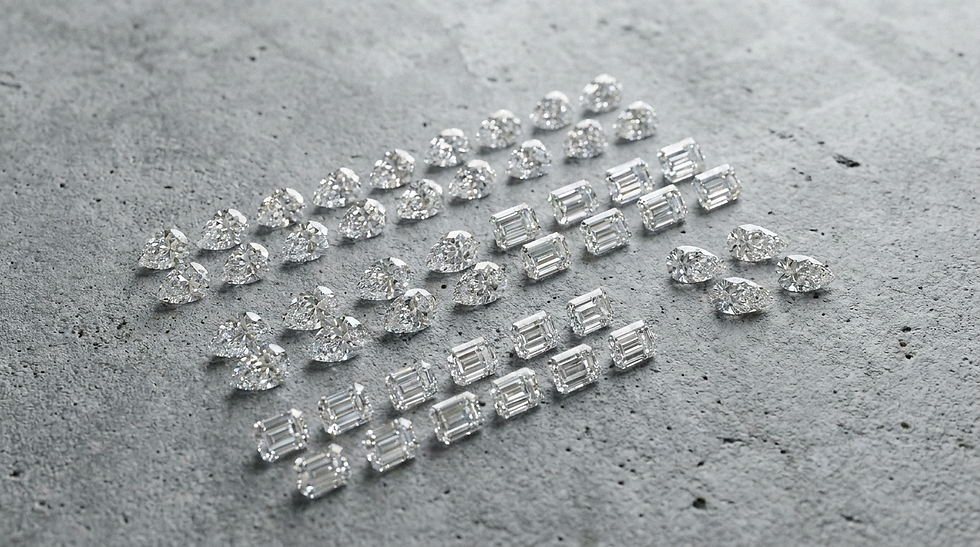
If you want to buy loose diamonds in Australia, you are choosing the stone before the ring, necklace or earrings. That order gives you more control than buying a finished piece. You can pick the exact diamond you like, then decide on the setting, metal and design.
It also helps you manage your budget. You can decide how much to put into the stone and how much into the setting, and you can compare diamonds side by side. If you want a custom design, a loose stone is the natural starting point.
A loose diamond suits people who want something personal, such as a bespoke engagement ring, as well as those who want to reset an existing piece.
The four Cs in plain language
Diamonds are described by four qualities, known as the four Cs. Each one affects how the stone looks and what it costs.
Cut
Cut is how well the diamond is proportioned and polished. It controls how the stone handles light, which is what creates sparkle. A well-cut diamond looks bright and lively, while a poorly cut one can look dull even if the other qualities are strong.
For most buyers, cut is the most important of the four. It is often worth choosing a better cut and accepting a small compromise somewhere else.
Colour
Colour describes how white or yellow a diamond looks. Many buyers prefer a stone that looks clear and bright in its setting. The difference between neighbouring grades is small and often hard to see once the diamond is set.
The metal affects how colour appears. White metals tend to make a diamond look cooler, while yellow or rose gold can make a slight warmth less noticeable.
Clarity
Clarity describes the tiny marks inside or on the surface of a diamond. Many of them cannot be seen without magnification. A stone that looks clean to the naked eye is often a good choice, and you do not always need the highest clarity grade to get a diamond that looks beautiful.
Carat
Carat is the weight of the diamond, and it is often mistaken for size. Two diamonds of the same weight can look different, depending on their cut and shape. Choose a carat weight that suits your design and your budget, and look at how the stone appears, not only the number.
Balancing the four Cs with your budget
You cannot maximise all four, so decide what matters most to you. A common approach is to put cut first, choose colour and clarity at a level that looks good to the eye and then set the carat weight to fit your budget.
Look at several stones side by side. Differences that seem important on paper can be hard to see in person, and a jeweller can show you which ones are worth paying for.
Choosing a shape
Shape is separate from cut, and it is mostly a matter of taste.
Round is the classic choice and tends to give the most sparkle. Oval and pear shapes have a longer look. Cushion and emerald shapes have a softer or more vintage feel. Princess and radiant shapes have a more modern, angular look. Marquise is long and slim with two points.
Natural or lab-grown
Diamonds can be natural, formed in the earth, or lab-grown, created in a controlled process. Both are real diamonds, but they differ in origin and usually in price.
Ask which one you are being shown, and make sure it is clearly stated in the paperwork. Think about what matters to you, such as origin, budget and how you want to feel about the stone, and choose accordingly.
Understanding the grading report
A grading report, sometimes called a certificate, records a diamond's qualities. It usually lists the cut, colour, clarity and weight, along with measurements and a diagram of the stone's features.
Check that the details match the diamond you are shown. Many reports include an identifying number that may be inscribed on the stone. Ask the jeweller how to verify the report with the issuing laboratory.
A report is a useful record, but it is not the whole story. Two stones with the same grades can look different, so look at the diamond itself, and ask to see it in different lighting.
Buying online or in person
Many people who buy loose diamonds in Australia compare stones online first, then see them in person. Both have advantages.
Online search tools let you filter by shape, size and quality and compare many stones from home. Look closely at the photos or video, and read the details carefully.
Seeing a diamond in person lets you judge how it looks in real light and how it compares with others. If you are buying a significant stone, it is worth looking at it before you commit, or asking for high-quality video and a clear returns policy.
Questions to ask a jeweller
A few questions make the process clearer.
Ask whether the diamond has a grading report and who issued it. Ask whether the stone is natural or lab-grown.
Ask about the returns policy. Find out how long you have to return a diamond, what condition it must be in and whether there are any costs. Get the details in writing.
Ask about valuation and insurance. A valuation for insurance purposes may be different from the price you paid, so ask how it works.
Setting your loose diamond
A loose diamond is only part of the story. The setting changes the look, and it affects how well the stone is protected.
Think about the style, such as solitaire, halo or three-stone, and the metal, such as yellow gold, white gold, rose gold or platinum. Choose claws or a bezel that suit your lifestyle.
Mistakes to avoid
The most common mistake is choosing on carat weight alone. A smaller diamond with a better cut can look more impressive than a larger, duller one.
Another is relying on the numbers without looking at the stone. Grades are a guide, and your eyes are the final test.
Finally, do not rush. Compare a few stones, ask questions and take your time.
Choosing with confidence
Decide on your budget and style, put cut first and balance colour, clarity and carat. Ask for a grading report, check it against the stone and ask about origin, returns and valuation. Take your time, and choose a diamond you love. Compare a few stones and keep the paperwork somewhere safe.
Frequently asked questions
What is the most important of the four Cs?
Cut is usually the most important, because it controls how well the diamond handles light and sparkles. Many buyers prioritise cut and then balance the other three to suit their budget.
Do I need a grading report when I buy a loose diamond?
It is strongly recommended. A report gives you a record of the stone's qualities, and you can check that it matches the diamond you are shown.
Should I buy a natural or a lab-grown diamond?
It depends on your preferences and budget. Both are real diamonds, but they differ in origin and usually in price. Ask the jeweller to explain the differences and state which one you are buying.


Comments