
Achieve a Harmonious Balance with Feng Shui Home Design

Discover how Feng Shui home design creates a harmonious balance by improving energy flow, enhancing comfort, and supporting a calm, welcoming living space.
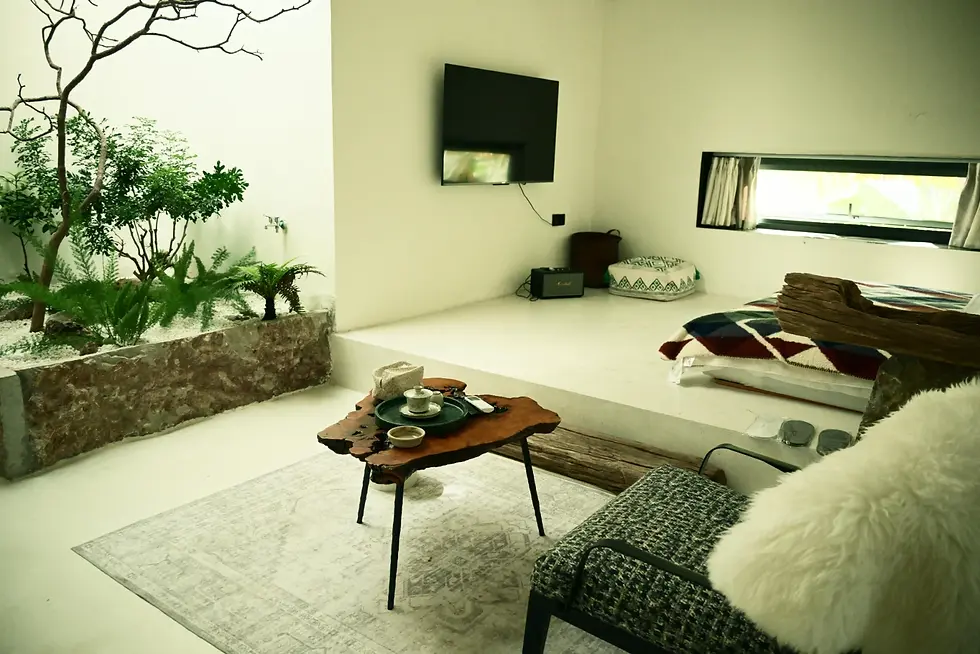
Ready to design a home that actually feels good to be in?
Feng Shui has been doing just that for thousands of years. In fact, this centuries-old Chinese practice has been beautifying homes and interiors way before "minimalism" was a thing.
In fact, far from being a passing fad or airy-fairy mysticism, Feng Shui has a proven track record.
Here's why it's big news for home decoration and design:
When a home is well-designed it makes people feel better, calmer, more energised and even more productive. That's the premise behind Feng Shui – it's all about creating harmony between humans and their physical environment by optimising energy flow (known as "Chi") throughout the space.
And it works:
In This Guide, We Cover:
What Is Feng Shui Home Design?
Why Feng Shui Works For Modern Homes
The Five Elements Of Balanced Design
Room-By-Room Feng Shui Tips
Common Mistakes To Avoid
What Is Feng Shui Home Design?
In Chinese Feng translates to "wind" and Shui means "water". Simple as that.
Feng Shui is an ancient practice of organising living spaces to create balance and harmony. The belief is that by enabling energy to flow unimpeded through the home, inhabitants enjoy greater peace, health and prosperity.
It's not just a case of haphazardly moving furniture from one place to another, though. Feng Shui principles use the decorative and design elements within a space as a framework for home styling.
Colour, texture, form and placement of natural elements all play their part in creating that sense of harmony. Even the smallest additions can have a profound effect.
Floor rugs are an excellent example of how natural textiles can ground a space and positively impact energy flow. Well-placed handmade big floor rugs will anchor a room, add interest and help define different zones in open-plan living spaces.
Cool, right?
Best of all, Feng Shui can work for any home – no matter how big or small, old or new. The principles apply to every space and budget.
Why Feng Shui Works For Modern Homes
Let's be honest:
Modern life is stressful.
Most of us spend the majority of our time inside – with research from Homes and Gardens claiming that humans spend 90% of their time indoors.
So the spaces we call home are hugely important.
Feng Shui seeks to redress the balance. Instead of a living space that saps us of energy, cluttered and dimly lit, it aims to create an environment that actively supports our wellbeing.
As it happens, studies show that Feng Shui really can work its magic in living spaces. Research in 2024 found that 78% of people felt more at peace in areas decorated using the practice.
Statistically, that's huge.
In reality, it's not surprising. Homes have a lot to contend with these days:
Clutter builds up fast
Natural light is often compromised
Open-plan living disrupts the energy flow
Screens and gadgets are everywhere
Feng Shui provides a set of straightforward solutions for each of those issues. It's not about slavishly following hard and fast rules. It's about knowing how space affects energy and then tweaking accordingly.
The Five Elements Of Balanced Design
There are five core elements to any Feng Shui home design. Every room needs a good mix of these to create harmony and balanced energy flow.
Here's the breakdown:
Wood
Wood is all about growth and vitality. It brings life to a space.
It can be included through:
Plants
Wooden furniture
Green hues
Rectangular shapes and columns
Wood element is most prevalent in the living room.
Fire
Fire is about passion and transformation. It injects energy into a space.
It can be included through:
Candles
Fireplaces and heaters
Red and orange hues
Adequate lighting
Fire element is often absent in bedrooms.
Earth
Earth is about nourishment and stability. It grounds a space.
It can be included through:
Ceramics
Stones and terracotta
Yellow tones and hues
Square or rectangular shapes
Earth element is most prevalent in dining areas.
Metal
Metal is about efficiency and clarity. It sharpens a space.
It can be included through:
Metal frames
White and grey hues
Circular shapes
Minimalist furniture
Metal element is most prevalent in home offices.
Water
Water is about wisdom and abundance. It provides nourishment to a space.
It can be included through:
Mirrors
Fountains
Black and blue hues
Wavy shapes
Water element is most prevalent in entryways.
Room-By-Room Feng Shui Tips
Rooms have different purposes and roles in a home. Feng Shui for each should take that into account.
Here are our top room-by-room tips:
The Entryway
The front door is where energy enters the house. It must be well-lit, clean and uncluttered.
Tip: adding a mirror to an entryway expands the space visually. If you have space for a small table by the front door, place fresh flowers or a plant on top to welcome positive energy as it arrives.
The Living Room
The living room is where everyone gathers. It's the hub of the home.
Arrange seating to promote conversation. Try not to have furniture placed with backs to the door.
Add a variety of textures and colours that are inviting. Large rugs help define the seating area and anchor the furniture layout. Natural fibres work especially well.
The Bedroom
Sleep is vital for health and wellbeing. Bedroom Feng Shui can make a real difference.
Position the bed with a clear view of the door but without being directly in line with it. Known as the "command position".
Keep electronics to a minimum and choose soothing colours. Soft blues, greens and neutrals are ideal. Don't store things under the bed – this blocks energy flow.
The Kitchen
The kitchen is all about nourishment and prosperity. Keep it as clutter-free and clean as possible.
It's important the stove isn't directly opposite the sink. Stove and sink are fire and water elements respectively. This creates a clash of energies.
Good lighting and ventilation are also important. Fresh herbs on the windowsill provide useful wood element energy.
Common Mistakes To Avoid
It's surprising how well-intentioned room designs can go wrong. Here are the biggest Feng Shui mistakes:
Ignoring clutter. Clutter is the enemy of energy flow. It must be banished.
Blocking pathways. Furniture should not obstruct natural walking routes through rooms.
Neglecting the front door. The entrance to a home is where energy comes in. It must be clean and well-maintained.
Overloading one element. Balance is key. Too much of one element creates imbalance.
Forgetting about lighting. Dark, shadowy areas trap stagnant energy. Mix natural and artificial lighting.
Fixing these errors is usually a simple case of identifying the problem.
Bringing It All Together
Feng Shui home design isn't as tricky as it first appears.
It all comes down to three simple principles:
Clear the clutter and let energy flow
Balance the five elements
Optimise furniture placement and create natural, comfortable spaces
The beauty of Feng Shui is that small changes can make a big difference. Moving a mirror here, a plant there or simply repositioning a bed can transform the energy of a room.
Start small with one room. Apply these principles and notice how different it feels.
Work through the house room by room, repeating the process. Slowly but surely, the whole home transforms into a harmonious sanctuary that actively supports wellbeing, productivity and peace.
That's the beauty of mindful home decoration and design.


Comments